Posted at 11:12 am by Gelene Celis, on September 11, 2019
…directed by Pablo Trapero (Argentina)
“While working alongside his long-time friend and colleague in building a hospital for the residents of a Buenos Aries shantytown, a troubled priest finds solace in a young, atheist social worker.” – IMDB
Posted at 4:11 pm by Gelene Celis, on July 9, 2019
by Luci Kaye (Windsor, Ontario Canada)
====================
I discovered it from one of those craft shows that’s held around Queen/Dufferin area.
They looked so creepy it felt like they would start walking at any point.
It was awesome.
I hope she doesn’t stop ’cause her horrific dolls are quite lovely.
Check out her Etsy here
Posted at 9:03 pm by Gelene Celis, on January 24, 2019
“Where I come from (Nigeria) we don’t call it ‘Scarification.’ That’s a Western terminology”
So what do you call them?
“Nothing. We don’t call it anything. It’s marks of identity within indigenous cultures”
Yeah but you must have a term for it? How do you communicate when you discuss it?
“We normally don’t discuss it. It’s nothing wrong nor a taboo or anything. To us, it’s a very common, everyday thing to see. We come across it everyday and everybody knows it’s marks of identity. It just is.”
=============
“Scarifying (also scarification modification) involves scratching, etching, burning / branding, or superficially cutting designs, pictures, or words into the skin as a permanent body modification.[1] In the process of body scarification, scars are formed by cutting or branding the skin by varying methods (sometimes using further sequential aggravating wound healing methods at timed intervals, like irritation.), to purposely influence wound healing to scar more and not scar less. Scarification is sometimes called cicatrization (from the French equivalent)…Within anthropology, the study of the body as a boundary has been long debated.[1] In 1909, Van Gennep described bodily transformations, including tattooing, scarification, and painting, as rites of passage.[3] In 1963, Levi-Strauss described the body as a surface waiting for the imprintation of culture. Turner (1980) first used the term “social skin” in his detailed discussion of how Kayapo culture was constructed and expressed through individual bodies. Inscribed skin highlights an issue that has been central to anthropology since its inception: the question of boundaries between the individual and society, between societies, and between representation and experiences.“ – Wikipedia
Posted at 4:20 pm by Gelene Celis, on April 20, 2017
…translates to “The Wild Planet” (1973) directed by René Laloux (Paris, France)
“This futuristic story takes place on a faraway planet where blue giants rule (Draags), and oppressed humanoids (Oms) rebel against the machine-like leaders.”
– IMDB
Posted at 9:30 pm by Gelene Celis, on October 13, 2016
…is a fortune-telling deck brought to you by EvanDoherty from Toronto, ON
====================
They were in an exhibit with tarot readers and they were right around the corner asking people, “Hey do you want a bullshit reading?” Nice.
Note: they weren’t trying to insult the tarot readers or anything. Their cards actually made it to an occult/tarot shop and the community is pretty cool about it.
I also get tarot readings, on occasion.
I just think this is a really creative and clever counter-culture/mockery.
Posted at 10:45 pm by Gelene Celis, on August 21, 2016
…directed by Alan Holly (Dublin, Ireland)
====================
“Take me in your arms. I wish to see the sky and feel the weather on my skin… I wish to hear the sea and smell the damp woods…Look at the ants… Show me fire’s burning…I wish to be among people… Grant me something hidden, something shared… Show me many things, so that I remember.”
Posted at 1:00 pm by Gelene Celis, on August 1, 2016
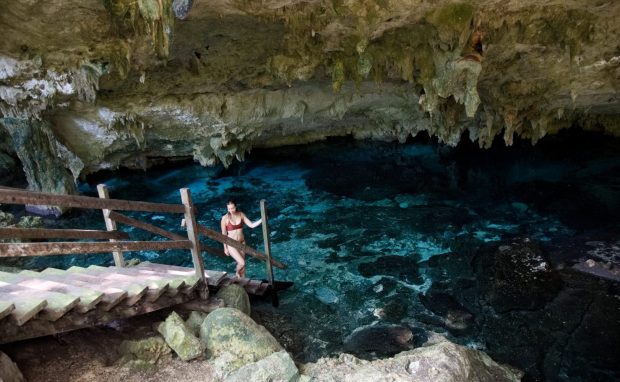
…is a flooded cave system located north of Tulum, on the Caribbean coast of the Yucatán Peninsula, in the state of Quintana Roo, Mexico. The exploration of Dos Ojos began in 1987 and still continues.
– Wikipedia
Playa del Carmen is only a few hours ride away from several Cenotes in Tulum, Mexico.
img courtesy of Every Steph
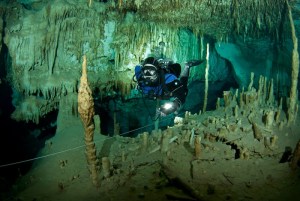
We went diving in it and there was a rope line to guide divers around. There was sunlight in many parts but there were also plenty that was so dark, we needed our flashlights.
It made me feel… irrelevant. It reminded me that I’m just another speck of dust in this world: a state of being that I am constantly on the lookout for, which is one of the reasons why I do these things.
Anyway, there’s also this thing called the halocline effect (density of saltwater changing or, in this case, saltwater and freshwater meet but don’t mix), which was happening at many points in the cave. Some parts were blurry like looking through a translucent, textured glass, whereas some parts look like a different body of water in itself. The divemaster warned us about the latter because of the illusion of “coming out from the water” and apparently some people had taken off their masks. We kept ours… but it was pretty unreal.
The Yucatan peninsula doesn’t have any lakes or anything for freshwater so this is where the Mayans got their supply 500 years ago. It’s insane. There are apparently spots where you can squeeze (when you push yourself through narrow gaps in between rocks); we didn’t do that but I think there’s that option for technical divers, which is a different route from the recreational one.
(If you’re interested in seeing more: Planet Earth, Ep. 4.)
DO NOT dive here if you have claustrophobic tendencies. The divemaster compared the large openings to the size of the gas truck. I’d say it was bigger and those bits were easy enough to navigate but there were spaces that were really narrow.
My buoyancy is not bad for ocean diving but for this, you have to be really steady.
I kept hitting the stalactites & stalagmites. It was a hassle, not mention a hazard (to the cave, your equipment – your life support – and therefore, yourself).
The divemaster held on to me during those parts to minimize the damage.
img courtesy of Cold Water Kitty
Either way, this is still most definitely worth checking out. You can go swimming, snorkeling… the view alone from its shallow waters are well worth the several hours’ ride.
We stayed in an all-in hotel thing so it was good to get out of the resort too. I like staying in bamboo-things and hippie stuff places when I’m in tropical areas but all-ins are great if you’re pressed for time and/or you’re literally just there to dive and care about nothing else.







 Gelene