Gelene

Gelene
  • About Me
  • Arts & Culture
  • Schitz
  • Contact
  • Tag: asia

    • The Favela Model: Philippines and Mexico

      Posted at 6:57 pm by Gelene Celis, on September 12, 2019

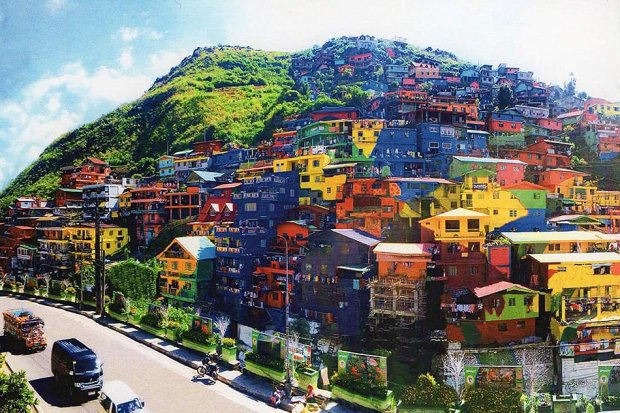
      Philippines – “Benguet Houses turned into Colorful Mural”

      Houses in Barangay Balili in La Trinidad, Benguet were turned into a colorful mural, reminiscent of Brazil's favelas. Photo courtesy of Department of Tourism - Cordillera Administrative Region.

      Houses in Barangay Balili in La Trinidad, Benguet, Philippines were turned into a colorful mural, reminiscent of Brazil’s favelas. Photo courtesy of Department of Tourism – Cordillera Administrative Region.

      “The project was adapted from the favela paintings in Brazil.

      The project is a first in the country, and is designed by the Tam-awan Village artists.  The main theme of the mural is the sunflower…

      Over 18,000 square meters or 150 houses will be painted.

      …The residents themselves are the ones painting the houses along with other volunteers, like students and members of the police.

      The paint is free and the residents recognize the economic benefits they will gain from the project.

      Some of them are looking forward to expanding their businesses.”

      Read more about it here


      Mexico – “Mexican Government Let Street Artists Paint 200 Houses To Unite The Community”

      giant-street-art-palmitas-macro-mural-germen-crew-mexico-10
      giant-street-art-palmitas-macro-mural-germen-crew-mexico-4
      giant-street-art-palmitas-macro-mural-germen-crew-mexico-7

      Read more about it here

      =================

      Check out Ted Talk: How Paintings Can Transform Communities

      Share this:

      • Click to share on X (Opens in new window) X
      • Click to share on Facebook (Opens in new window) Facebook
      • Click to share on LinkedIn (Opens in new window) LinkedIn
      • Click to share on Pinterest (Opens in new window) Pinterest
      • Click to share on Tumblr (Opens in new window) Tumblr
      • Click to email a link to a friend (Opens in new window) Email
      • Click to print (Opens in new window) Print
      Like Loading...
      Posted in Arts & Culture, Pinoy | 0 Comments | Tagged art, asia, benguet, brazil, community, culture, favela, mexico, mural, philippines, south america, street art
    • Haiku

      Posted at 5:30 pm by Gelene Celis, on March 21, 2018

      …is a very short form of Japanese poetry. It is typically characterised by three qualities:

      • The essence of haiku is “cutting” (kiru).[1] This is often represented by the juxtaposition of two images or ideas and a kireji (“cutting word”) between them,[2]a kind of verbal punctuation mark which signals the moment of separation and colors the manner in which the juxtaposed elements are related.
      • Traditional haiku consist of 17 on (also known as morae though often loosely translated as “syllables”), in three phrases of 5, 7, and 5 on respectively.[3]
      • A kigo (seasonal reference), usually drawn from a saijiki, an extensive but defined list of such words.
        – Wikipedia

      American Haiku

      Jack Kerouac’s Book of Haikus

      … on the other hand, as started by Jack Kerouac,
      “The American Haiku is not like Japanese Haiku. The Japanese Haiku is strictly disciplined to seventeen syllables but since the language structure is different, I don’t think American Haikus (short three-line poems intended to be completely packed with Void of Whole) should worry about syllables because American speech is something again… bursting to pop.

      Above all, a Haiku must be very simple and free of all poetic trickery and make a little picture and yet be as airy and graceful as a Vivaldi Pastorella.”

      ===================================

      From “Goodbye Christopher Robin”
      – Bees were buzzing during Christopher Robin and his father’s first walk to the woods together. The father stands still, trying to control himself, from his association of the sounds to traumatic experiences from the war.
      The boy looked up to his father, “Bees are good, aren’t they? Even though they can sting, they hardly ever do, so long as you leave them to get on with things. They just want to make honey.”
      The father replies, “Honey… bees…  I completely forgot about bees… And honey.

      I forgot about honey.”

      =====

      I used to go to Pages bookstore at Queen West Toronto (it closed down many years ago) and picked up a Haiku book just out of curiosity.

      Haiku was invented in the 1600’s but I fell in love with it in the 2000’s; the detailed and pensive descriptions reflected how I felt inside when I hear the sounds of dry leaves rustling, the warmth of the sun against my skin, the smell of saltwater from the ocean or how the ice-covered dead trees fascinate me during winter… simple reminders, which we can all find in our respective daily grind, that we all too often ignore, which is why we tend to forget that Life is a Gift.

      Below are some of my favourite traditional Haiku poems along with some college Haiku, which, if you’re asking me, is genius in its own right.


      Basho Matsuo (1644-1694)

      Autumn moonlight –
      a worm digs silently
      into the chestnut.

      Kobayashi Issa (1763-1828)

      Autumn wind –
      mountain’s shadow
      wavers.
      Don’t weep, insects –
      Lovers, stars themselves,
      Must part.

      Michael Dylan Welch (1962- )

      meteor shower
      a gentle wave
      wets our sandals

      ====================

      Check out old school Haiku here
      Check out new school Haiku here
      Share this:

      • Click to share on X (Opens in new window) X
      • Click to share on Facebook (Opens in new window) Facebook
      • Click to share on LinkedIn (Opens in new window) LinkedIn
      • Click to share on Pinterest (Opens in new window) Pinterest
      • Click to share on Tumblr (Opens in new window) Tumblr
      • Click to email a link to a friend (Opens in new window) Email
      • Click to print (Opens in new window) Print
      Like Loading...
      Posted in Arts & Culture | 0 Comments | Tagged asia, canada, haiku, japan, north america, poetry, usa
    • Schitz – All in a Day’s Work

      Posted at 8:04 pm by Gelene Celis, on September 19, 2016

      You have to do safety stops when you ascend (ascend 10-15 feet, chill out for 3-5 minutes, keep ascending), after a certain depth (about 25 metres/80 ft, mandatory at 100 ft) ’cause of plenty reasons including decompression sickness – “the bends,” ruptured blood vessels, joint pain, paralysis and other fun stuff including straight up, death. The pressure underwater contracts your lungs and if you go up fast or if you don’t make safety stops, your lungs could pop and it’s instant death OR you can still make it to the boat, discombobulated, and die within seconds or minutes.
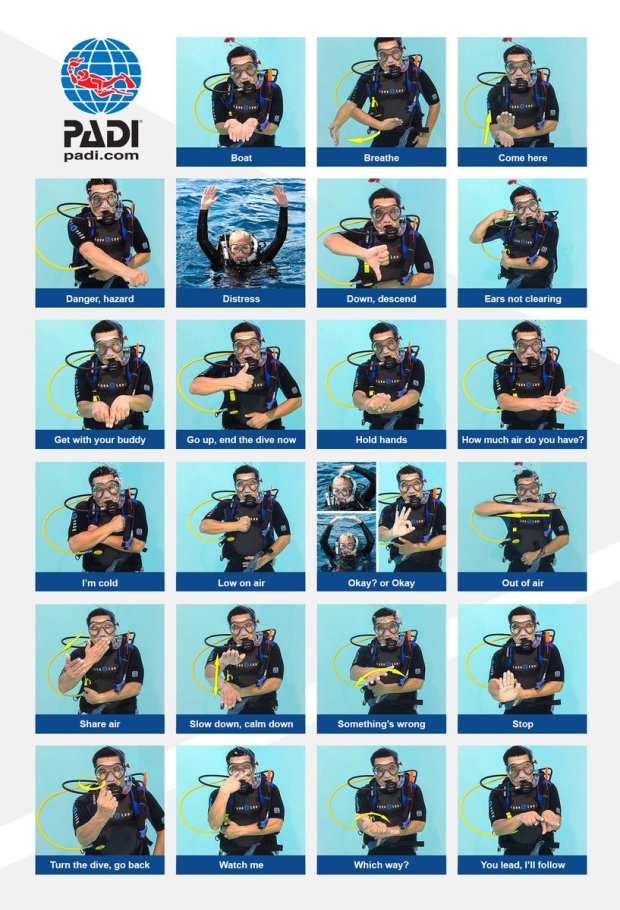
      Also, are certain hand signals you learn for diving since we can’t talk underwater. From my understanding, I was to pair with the Belgian and my travel buddy (ex) with the divemaster.

      My partner was busy taking photos underwater, which was cool, up until I started signaling that I was low on air and we need to go up. We all carry an extra/emergency regulator so I swam towards him, in hopes that he could spare some air and get us both to safety. My supply was getting close to the red part of the indicator (at where we were, I had just the right cut to get me back up, which is better than short but still no good).
      The spot we went to wasn’t too great at the time: it was an overcast day, there was a current nearby, anemone particles in the water – all factors which lessen visibility.
      Before we went in, during the briefing, we were told that sharks come by every now and then, which I was both excited and nervous about; they’re less likely to attack groups of people. I’ve only ever seen a couple of baby hammerheads that were about a foot long, which we swam away from ’cause we feared the protective mother.  But sharks supposedly just kinda swim around and mind their own business up until they get hungry. Even then they prefer fish so don’t wear anything shiny that could be mistaken as fish scales underwater. They get curious, “Oh hey that’s new. I wonder what it is? I’ll take a nibble and find out…” 🤔
      Anyway, I started swimming closer towards my partner, when something started tugging my fins. I looked back and saw nothing, “Uh OK. Maybe I just hit something,” shrugged it off and kept going.
      I was trying to calm myself down. I needed to save oxygen and freaking out isn’t really conducive to that.
      I felt the tug again… a couple times this time. I looked around and did a 360 to check. Still nothing.
      The “occasional sharks” started entering my thoughts but it wasn’t so exciting at this point.
      I felt the tug again. This time around, it pulled me at least about a foot backward.
      For a couple of seconds, I was in pure fear, “Fuck!  I’m about to get eaten alive!”
      I screamed until I felt a tap on my shoulder.
      To my relief, it was my friend, the divemaster.
      He gave me his emergency regulator and said, muffled underwater but I heard it very clearly, “I got you.”

      We all partied that night as usual.

      I still dive to this day.

      =================

      All in a day’s work.


      Share this:

      • Click to share on X (Opens in new window) X
      • Click to share on Facebook (Opens in new window) Facebook
      • Click to share on LinkedIn (Opens in new window) LinkedIn
      • Click to share on Pinterest (Opens in new window) Pinterest
      • Click to share on Tumblr (Opens in new window) Tumblr
      • Click to email a link to a friend (Opens in new window) Email
      • Click to print (Opens in new window) Print
      Like Loading...
      Posted in Schitz, Travel | 0 Comments | Tagged asia, philippines, scuba
    • Heart

      Posted at 1:28 pm by Gelene Celis, on February 3, 2016

      …by Erick Oh (originally from Korea, currently based in California, USA)

      =================

      Check out his site here
      And his Vimeo here

      I forget which film fest I discovered it from but it was one of those shorts they show before the feature.

      Share this:

      • Click to share on X (Opens in new window) X
      • Click to share on Facebook (Opens in new window) Facebook
      • Click to share on LinkedIn (Opens in new window) LinkedIn
      • Click to share on Pinterest (Opens in new window) Pinterest
      • Click to share on Tumblr (Opens in new window) Tumblr
      • Click to email a link to a friend (Opens in new window) Email
      • Click to print (Opens in new window) Print
      Like Loading...
      Posted in Arts & Culture | 0 Comments | Tagged animation, art, asia, california, culture, film, north america, seoul, usa
    • What Does Having a Biracial or Multiracial Background Mean in Your Country?

      Posted at 5:18 pm by Gelene Celis, on January 19, 2016

      …by The Stream, Al Jazeera (Worldwide availability, based in Doha, Qatar)

      Screen Shot 2016-01-19 at 3.57.32 PM

      ==================

      Check out the page on Al Jazeera here

      Share this:

      • Click to share on X (Opens in new window) X
      • Click to share on Facebook (Opens in new window) Facebook
      • Click to share on LinkedIn (Opens in new window) LinkedIn
      • Click to share on Pinterest (Opens in new window) Pinterest
      • Click to share on Tumblr (Opens in new window) Tumblr
      • Click to email a link to a friend (Opens in new window) Email
      • Click to print (Opens in new window) Print
      Like Loading...
      Posted in Arts & Culture | 0 Comments | Tagged asia, europe, middle east, north america
    • Souveraines: Ces Peuples ou les Femmes sont Libres

      Posted at 12:26 pm by Gelene Celis, on November 8, 2015

      …is a photography book by Pierre de Vallombreuse (Bayonne, France)

      …the title also roughly translates to “Sovereign:  The Peoples Whose Women are Free”

      pierredevallombreuse9
      pierredevallombreuse2
      pierredevallombreuse4
      pierredevallombreuse5
      pierredevallombreuse7


      Searching for an alternative to the patriarchal societies often found in Western countries, French photographer, Pierre de Vallombreuse journeyed to Southeast Asia to document the fascinating lives of indigenous people in cultures that place equal or even more value on women. Taking a humanistic approach to an anthropological question, de Vallombreuse used his camera to explore the progressive traditions of isolated communities that have remained untouched by globalization and technology.
      “Most of the cultures in Southeast Asia are more based on equality than domination,” the photographer wrote to us in an email. For this series Souveraines, which was commissioned by Arthaud Publishing, de Vallombreuse selected four remote cultures where women play decisive and central roles in governance and spirituality—the Khasi, a matrilineal and matrilocal society in northeastern India; the Palawan, a non-hierarchical community in the Philippines; the Mosuo ethnic group in China; and the Badjao, a sea-dwelling group that prefers boats to houses.
      De Vallombreuse told us that some of the most striking things he observed in these societies included “fluidity, simplicity, and normality” between men and women. “This should be normal everywhere,” he said.
      “Equality, mutual respect between the sexes, freedom to all; some traditional societies grant women leading social and spiritual roles,” the series description reads on the website of Galerie Argentic, where Souveraines is currently on display in an exhibition. “Among these peoples, women, recognized for their uniqueness and skills, are masters of their destiny.”

      ========================

      Check out Pierre’s site here
      And his Facebook here
      And his Twitter here

      Share this:

      • Click to share on X (Opens in new window) X
      • Click to share on Facebook (Opens in new window) Facebook
      • Click to share on LinkedIn (Opens in new window) LinkedIn
      • Click to share on Pinterest (Opens in new window) Pinterest
      • Click to share on Tumblr (Opens in new window) Tumblr
      • Click to email a link to a friend (Opens in new window) Email
      • Click to print (Opens in new window) Print
      Like Loading...
      Posted in Arts & Culture | 0 Comments | Tagged asia, bayonne, book, equality, ethnic, europe, france, indigenous, matriarchal, matriarchy, native, photography, southeast asia, women
    • Schitz – Sometimes Fingers

      Posted at 10:27 am by Gelene Celis, on October 3, 2015

      Divemaster/Instructor: “Alright folks we’re here at the Yapak, we’re going to descend nice and slow down to about 25 meters, completely down to 35 for some – check, double-check, triple-check, anal check with your partners and your group.
      When we get down there we’re gonna do some fish feeding.  We got some bread over here so you can break them down in pieces and spread it out.
      We might also come across a school of triggerfish.  If they’re around you, just kinda hang in there and chill out.
      They like to eat bread, algae, sometimes fingers so don’t go on flailing your arms around those guys.”

      =================

      Test the regulator. ✔️
      Test the BCD: ✔️
      Spit on and put some water on goggles to remove the fog: ✔️
      Appropriate amount of weights: ✔️
      Tank pressure and supply: ✔️
      Identify Dory and Nemo: ✔️
      Not flailing your arms around triggerfish as warned, with signals underwater even after the low down by divemaster because you don’t know what those are with lack of reference from Finding Nemo: ✔️
      Come back with all body parts intact: ✔️

      #BeingAnAdult

      Share this:

      • Click to share on X (Opens in new window) X
      • Click to share on Facebook (Opens in new window) Facebook
      • Click to share on LinkedIn (Opens in new window) LinkedIn
      • Click to share on Pinterest (Opens in new window) Pinterest
      • Click to share on Tumblr (Opens in new window) Tumblr
      • Click to email a link to a friend (Opens in new window) Email
      • Click to print (Opens in new window) Print
      Like Loading...
      Posted in Schitz, Travel | 0 Comments | Tagged asia, philippines, Schitz, scuba
    • Apocalypse Now

      Posted at 2:49 pm by Gelene Celis, on August 15, 2014

      …directed by Francis Ford Coppola (Detroit, Michigan, USA)

      based of the book, “Heart of Darkness” by Joseph Conrad 

      “A U.S. Army officer serving in Vietnam is tasked with assassinating a renegade Special Forces Colonel who sees himself as a god.”
      – IMDB

      ======================

      “We were in the jungle. We had too much money. We had too much equipment. And little by little, we went insane.”
      – Francis Ford Coppola

      We thoroughly studied the filmmaking components along with the psychology of the characters and the filmmakers in film school; rightfully so.
      Apparently, everybody just went batshit (the opening scene with Sheen going nuts and punching the mirror, making his hands bleed was real.  It wasn’t fake blood and he was actually pretty fucked up).
      From what we’ve studied, I think it’s safe to say that they probably ended up making an epic because the people behind the camera delved into their darkness just as the characters in the movie did.

      Check out the film’s IMDB here
      And Wiki entry here

      Check out Hearts of Darkness IMDB here
      And its Wiki entry here

      Share this:

      • Click to share on X (Opens in new window) X
      • Click to share on Facebook (Opens in new window) Facebook
      • Click to share on LinkedIn (Opens in new window) LinkedIn
      • Click to share on Pinterest (Opens in new window) Pinterest
      • Click to share on Tumblr (Opens in new window) Tumblr
      • Click to email a link to a friend (Opens in new window) Email
      • Click to print (Opens in new window) Print
      Like Loading...
      Posted in Arts & Culture | 0 Comments | Tagged art, asia, culture, film, north america, usa
    • Ati Atihan

      Posted at 2:27 pm by Gelene Celis, on February 13, 2012

      …is a festival held every January in Panay Island, Philippines in honor of Sto. Niño.

      =================

      I used to watch these as a kid.  Also, some of the schools I went to had us dress up and perform tribal things. I miss it.

      Share this:

      • Click to share on X (Opens in new window) X
      • Click to share on Facebook (Opens in new window) Facebook
      • Click to share on LinkedIn (Opens in new window) LinkedIn
      • Click to share on Pinterest (Opens in new window) Pinterest
      • Click to share on Tumblr (Opens in new window) Tumblr
      • Click to email a link to a friend (Opens in new window) Email
      • Click to print (Opens in new window) Print
      Like Loading...
      Posted in Arts & Culture, Pinoy | 0 Comments | Tagged art, asia, culture, philippines
    Newer posts →
    • Follow Gelene on WordPress.com
    • Categories

    • Enter your email address to follow this blog and receive notifications by email.

      Join 606 other subscribers
    • Tags

      africa afro-brazilian agriculture airbrush aktun-ha alberta ancient angelina angkor thom angkor wat animation anthropology apo island apo reef architecture argentina art asia asian aurora autumn avant-garde backpacking badjau baile funk banff banteay kdei banteay samre banteay srei batman batman and robin bayonne bayon temple bc beach beauty belgian belgium belly dance belly dancing Belém benguet billiards biomechanics birthday blue soil body body art body modification body movement book box brazil brazilian british columbia brooklyn brooklyn museum buddhism buenos aires burlesque buscalan business butbut cairo calgary california cambodia canada canadian cancer carcass caribbean carimbo cartoon casa cenote cave cave diving cavern diving caverns caving cebu cenote cenotes chile china christmas city coffee coffee beans collaboration colonialism communication community confetti construction corporation corruption cougar couture covid19 cowansville creativity culture cumbia dance death deer democracy denmark design diet diez vistas digital art dive diversity documentary dolls dos ojos dub dublin dutch eastern eastern culture education eel egypt electronic el pit el salvador emerald lake equality ergonomics ethnic eurasia europe Europeans expat expatriate expats experiential learning experimental fall fashion favela feminism filipina filipino filipino food film fine art fitness flash tattoo flower folk forest france freedom french funk geometric tattoo geometry german germany girl glitter gopro graffiti grassroots greed grotto mountain guatemala hadrien star haiku halifax hanging coffins harem health hiking hip hop history holland hong kong horror howl hungary igorot illustration indigenous indigenous art installation art interracial iraq ireland islam island italy japan jewellery johnston canyon journalism journalist kalinga kata beach kiev koh bon koh lanta lake louise la union learning leather lethbridge lgbtq life life lessons lifestyle liveaboard london los angeles love luzon maktub malapascua manila manta ray Marajó marble canyon marijuana math matriarchal matriarchy mayan mayor metal mexico middle east mindoro miniature modern art money mont orford montreal moscow mountain mountain climbing mountain province mountains mountain trekking movie mta mugler munich mural museum music music video muslim native native american nature needle neighborhood neil gaiman new year new york new york city new zealand nfb nicete-ha north america north york NYC oceania octopus ojibwe ontario orgasm ottoman empire outdoors painting pampanga papua new guinea Parc d’environnement naturel de Sutton paris parol Pará patriarchy peachland pens penticton perception performance performance art philippines photography photoshop phuket plant poetry portugal portuguese poverty power preah khan pretty printmaking productivity product stylist psychology punk purse quebec rain rat's nest cave recycled reggae religion revelstoke rice terraces rio de janeiro rob ford rochester rock & roll sablayan sacred geometry safety sagada san francisco san juan san juan beach sao paulo scarification Schitz scotland Scottish scuba scuba dive scuba diving sea of clouds seoul sex sexuality sharks siem reap similan islands slum social social issue society socio-economics sociology soul south america southeast asia southeastasia spain spaniard spanish stage performance stingray stop-motion street art street food stromanthe stylist subway surf surfing surf school surrealism sutton syria ta keo talk ta prohm tarot tattoo tattoo artist tattoos Tech techno technology ted thailand the sandman thierry mugler thresher sharks toronto tourism Travel travel guide trekking tribal tribal art tribal tattooist tricycle trinidad & tobago tropical tropics true story ttc tuk-tuk tulum tupelo twerk uk ukraine underwater photography urban urban art urban space usa vancouver van gogh vegan vegetarian video washington weed west coast western canada whale shark whang-od whangod windsor winter winter hiking wolf woman women world religions writing yellowback fusilier yoga yucatan yucatan peninsula
    • View gel.inked’s profile on Facebook
    • View gel.inked’s profile on Instagram
    • View gelene-celis’s profile on LinkedIn

Website Built with WordPress.com.

Privacy & Cookies: This site uses cookies. By continuing to use this website, you agree to their use.
To find out more, including how to control cookies, see here: Cookie Policy
  • Subscribe Subscribed
    • Gelene
    • Join 606 other subscribers
    • Already have a WordPress.com account? Log in now.
    • Gelene
    • Subscribe Subscribed
    • Sign up
    • Log in
    • Report this content
    • View site in Reader
    • Manage subscriptions
    • Collapse this bar
 

Loading Comments...
 

    %d